
The CAR and its members have consistently made environmental sustainability a priority in radiology, through research, presentations, publications, and more. Radiology departments are high consumers of energy and are a major source of greenhouse gas emissions. To help medical imaging professionals navigate environmental sustainability in their departments, the CAR produced the Environmental Sustainability in Radiology playbook in collaboration with CASCADES, a pan-Canadian initiative on healthcare and climate funded by Environment and Climate Change Canada.
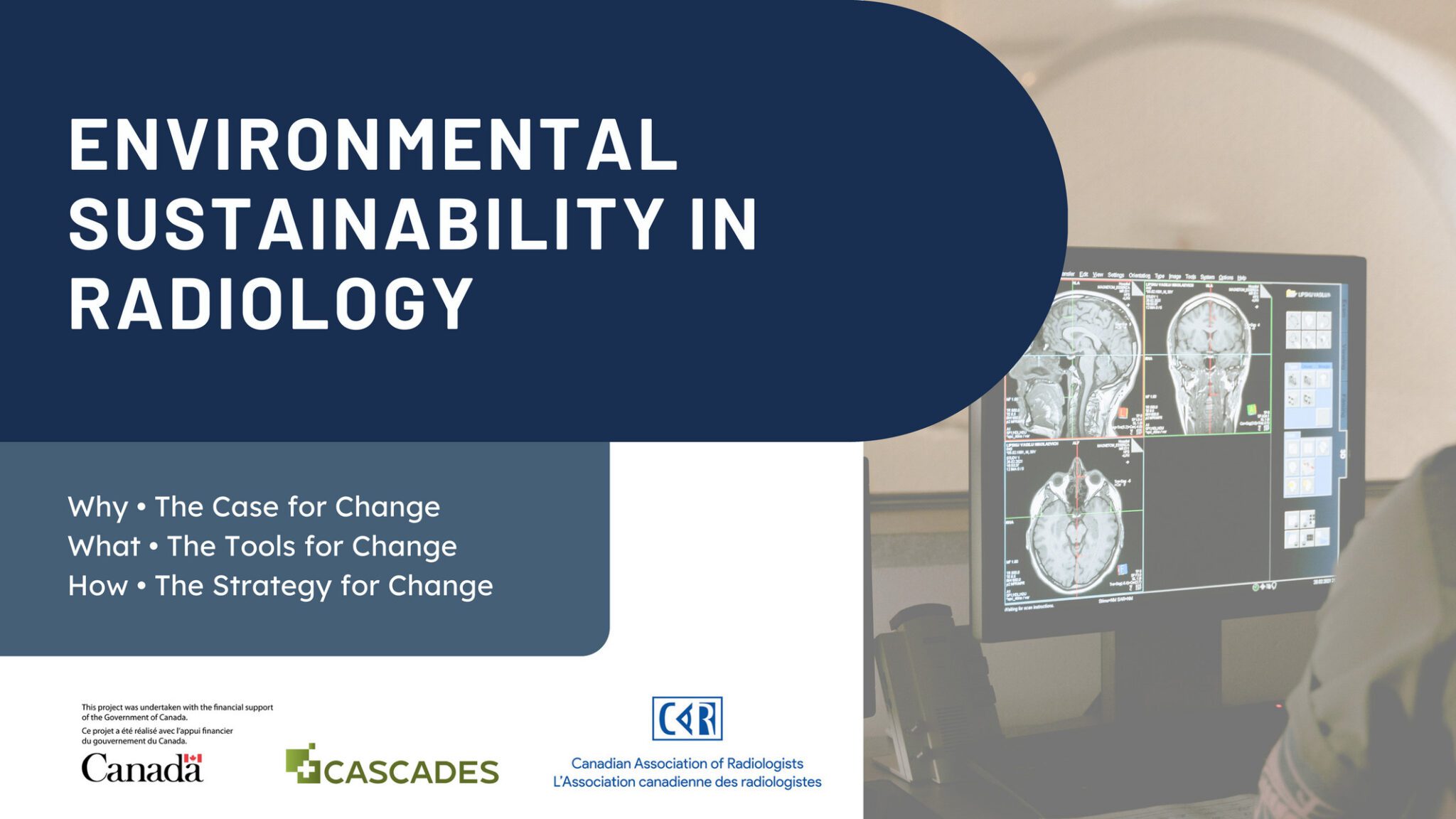
The playbook itself was modelled after the CAR’s Statement on Environmental Sustainability in Medical Imaging, published in July 2024. It is intended for all medical imaging professionals with several key objectives. These include how to discuss greenhouse gas emissions and waste from medical imaging, define and describe mitigation and/or adoption opportunities in Canada, and explore strategies for low carbon, high-quality medical imaging.
“This playbook is a practical tool that responds to a well-identified need in the field of medical imaging and is organized around three key questions: why it matters, what actions are possible, and how to implement them,” said Sarah Machane, Innovation Lead at CASCADES. “It leverages the expertise of Dr. Maura Brown and Dr. Kate Hanneman and organizes existing data, brings together relevant resources, and outlines actionable steps. The result is a structured and accessible document that supports the implementation of sustainability strategies in radiology departments, without compromising the quality of care.”
Dr. Brown is the lead author of the playbook and contributed to the CAR’s original position statement. She says the playbook is an excellent resource for making informed decisions swiftly and correctly.
“This playbook offers practical, evidence-based steps for reducing emissions and waste in radiology. It empowers imaging teams to lead climate-conscious change, supporting both planetary and patient health,” she said. “As climate impacts escalate, our sector must act decisively. This guide makes that action feasible, measurable, and aligned with healthcare’s core mission.”
The playbook outlines the importance of making radiology more sustainable, the planetary threats we currently face, and the contributors arising from the healthcare system. It details which tools and points of knowledge are needed to effect positive changes on the environment and concludes with strategies for medical imaging professionals and their teams to realize these intended changes in their unique healthcare setting.
“Medical imaging is a significant contributor to healthcare-related greenhouse gas emissions-up to 1% globally-due to the energy demands of imaging equipment, data storage, and supply chains,” said Machane. “At the same time, imaging services are increasingly vulnerable to the effects of climate change, including extreme weather events. This project was therefore important to identify opportunities for action and strengthen the health system’s resilience while reducing its environmental impact.”
Machane notes the overall goal of the playbook is to serve as a reference for integrating sustainability into various radiology settings.
“We hope it will encourage teams to reassess their protocols, adopt low-carbon practices, and collaborate on initiatives to reduce environmental impact and improve energy efficiency. Ultimately, this guide could support a broader shift toward more sustainable and resilient medical imaging services across Canada.”
Read the Environmental Sustainability in Radiology playbook today.