
Two champions of environmental sustainability research in radiology have released the findings of their study examining how the research field has evolved, where evidence is strongest, and where gaps remain.
Environmental Sustainability in Radiology: A Global Bibliometric Analysis of Growth, Structure, and Emerging Research Priorities was recently published in the CAR Journal (CARJ) and authored by Dr. Marliza O’Dwyer, Editor-in-Training from the Faculty of Radiologists in Ireland, Dr. Kate Hanneman, Co-Chair of the CAR Environmental Sustainability Working Group and leader in studying radiology’s impact on the environment.
“Radiology has a substantial environmental footprint, including energy use, equipment, digital infrastructure, contrast agents, supplies, and waste,” said Dr. O’Dwyer. “At the same time, imaging plays an important role in understanding and responding to the health effects of climate-related environmental exposures. This study gave us an opportunity to map how sustainable radiology has evolved globally and to identify where future research can have the greatest impact.”
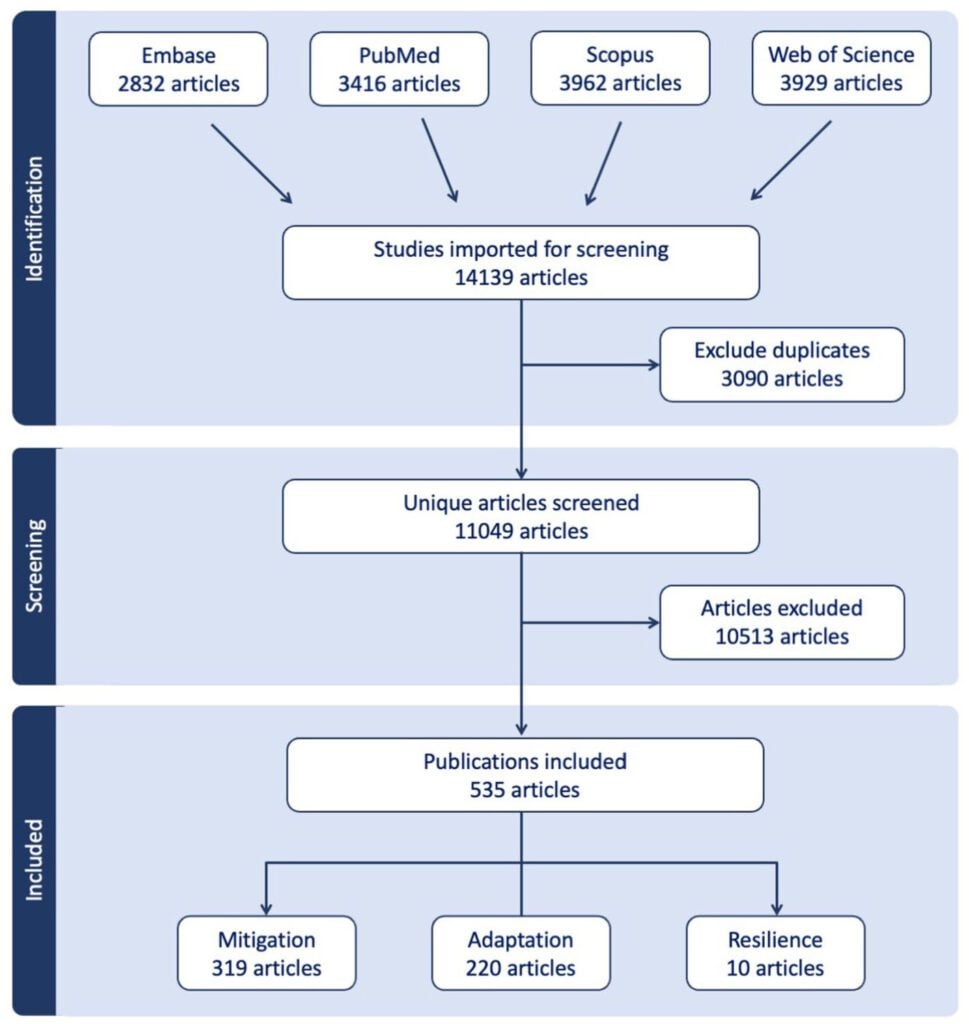
The study was conducted as a bibliometric analysis, a quantitative approach to evaluating patterns in published scientific literature that measures publication output, citations, authorship, journals, countries, institutions, and collaboration networks to understand how a research field is developing.
The analysis studied 535 publications related to environmental sustainability in radiology, examining publication growth citation trends, publication types, journals, countries, institutions, collaboration networks, research themes, and the overall maturity of the evidence base.
The publications were categorized into three non-mutually exclusive domains: mitigation, adaptation, and resilience. Mitigation included work focused on reducing the environmental impact of radiology, such as energy use, emissions, waste, contrast stewardship, and workflow optimization. Adaptation included studies using imaging to understand and respond to climate-related environmental exposures, such as air pollution and heat. Resilience included work on maintaining radiology services during climate-related disruptions, including infrastructure, supply chains, data systems, and workforce sustainability. Mitigation research represented the largest proportion of publications and is increasingly transitioning toward data-driven and implementation-focused work. However, much of the mitigation literature remains conceptual, policy-oriented, or based on reviews and commentaries, highlighting the need for more empirical studies, standardized metrics, and implementation of research.
“By categorizing publications into mitigation, adaptation, and resilience, we can see that sustainable radiology is not one single research stream,” said Dr. Hanneman. “It encompasses reducing our own environmental impact, understanding climate-related health effects, and preparing imaging systems for disruptions.”
The study found rapid growth in sustainability-related research, particularly after 2019; more than half of the publications analyzed were published in 2024 and 2025 alone, demonstrating substantial recent momentum in sustainable radiology research.
Dr. O’Dwyer noted there remains a substantial underrepresentation of resilience as there are currently limited publications examining how radiology departments can prepare for and respond to climate-related disruptions, including service continuity, infrastructure preparedness, supply chain challenges, changing imaging demand, and workforce pressures.
Overall, the findings demonstrate strong international momentum in sustainable radiology and highlight the need for more implementation-focused research, standardized sustainability metrics, broader global collaboration, and greater attention to healthcare system resilience.