
For many radiologists and trainees, the transition from reading textbooks to interpreting complex scans can feel like navigation without a map. While traditional resources offer a wealth of information, they often lack the practical, “real-world” insights needed to read a scan with confidence on day one of a shift.
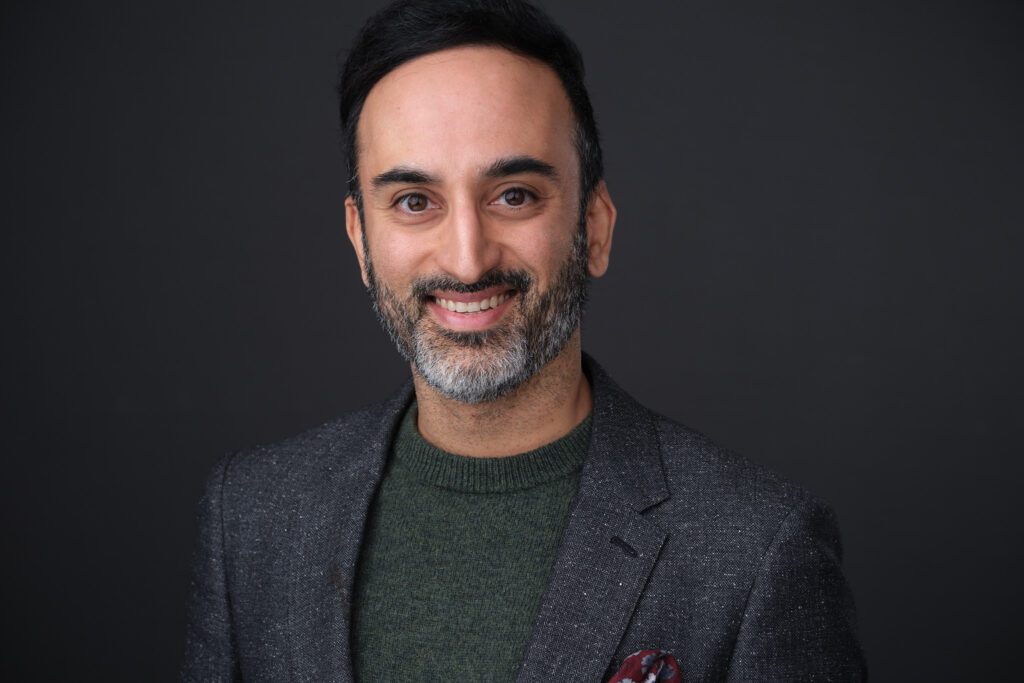
Recognizing this gap, CAR member Dr. Rajesh Bhayana developed Navigating Radiology – an innovative, interactive case-based educational platform with a full-screen PACS designed to simplify complex concepts and provide a streamlined roadmap for mastery. The platform made waves at RSNA 2025 with the launch of its “AI Attending” voice mode, a Socratic feedback tool that allows radiologists and trainees to talk through cases and receive real-time guidance. The platform covers both basic CT and comprehensive subspecialty MRI and offers CME credits for staff radiologist learners.
Dr. Bhayana says there is a distinct disconnect in radiology between acquiring knowledge and acquiring practical skills.
“Education often focuses heavily on the former, yet the skill of interpreting imaging is vastly different from textbook knowledge. I experienced it myself and saw many of my colleagues experience the same,” he recalled. “You can read an entire chapter on a subject like knee MRI, show up to rotation, and have no idea how to interpret the actual scan. Existing resources also tend to overcomplicate the material, forcing learners to bounce between sources filled with minutiae that are disconnected from clinical practice.”
In creating Navigating Radiology, Dr. Bhayana aimed to bridge that gap by making incremental learning more practical, efficient, and representative of how radiology is practiced. The platform’s approach to each concept is to reinforce the “First Principles” and orient the learner to the image, explaining why the pathology looks as it does instead of relying on remote memorization common in textbooks.
“When creating our intro videos or case-based courses, I filter everything through two criteria,” he explained. “What is everything a learner needs to know to start interpreting this study immediately and what actually matters to a practicing radiologist?”
The new AI Attending tool and its interactive case walkthroughs simulate the reading room experience by encouraging the user to commit to a diagnosis without the anxiety of judgement from a human attending. The tool provides a Socratic feedback loop of mentorship without the time pressure, guiding those who are off track or offering deeper insight when correct.
“Real-world radiology isn’t about interpreting single, static images; it’s about managing a full DICOM stack with multiple series,” said Dr. Bhayana. “Our platform includes a full-screen PACS to mimic that environment, but we also address the missing ingredient in traditional learning: autonomy.”
He says that his platform intends to reduce stress at three critical career points: on-call preparation, achieving subspecialty mastery at the end of residency, and maintaining skills as staff.
“Anxiety often stems from a lack of exposure. For example, a resident might only stage one or two rectal MRIs during a rotation, which isn’t enough for mastery. Our platform fills that volume gap with comprehensive courses (like our 20+ case MRI Rectum course) that allow learners to see a high volume of essential pathology quickly. Whether it’s preparing for a high-stakes call shift or acting as a refresher for a staff radiologist, the goal is practice-readiness.”
As radiology impacts patients at nearly every stage in the healthcare system, the platform teaches the critical findings that directly alter clinical management.
“Take our cervical cancer staging cases as an example; we break down exactly what the treating team needs to know and why. When a radiologist provides a more accurate, confident read on those studies, it directly impacts the treatment path the patient receives.”
Beyond AI innovation, Navigating Radiology is expanding rapidly in three key areas:
- Institutional Features: Dashboards that track progress and utilize AI to identify knowledge gaps at both the individual and program levels.
- Philanthropy: Partnering with Rad-Aid to pilot the platform in low-resource regions, ensuring that high-quality training is accessible globally where materials are often slim.
- CPD Expansion: Launching over 120 hours of low-cost CPD or “mini-fellowships” for staff radiologists: efficient, high-yield courses that focus strictly on what matters in an evolving field.
The long-term goal, said Dr. Bhayana, is to create a completely personalized AI tutor that understands each learner’s unique strengths and weaknesses.
Exclusive for CAR Members: Access your specialized member discount at car.navigatingradiology.com.
Congratulations to Dr. Bhayana and his team on the innovative work and best of luck for the future.